
Durable, scalable housing solutions using engineered earth materials.
Low‑Cost Housing Built From Stabilised Soil
At the core of every successful housing project is robust soil stabilization. Our innovative solutions minimize risks and cut costs significantly. With our proven methods, we ensure your infrastructure is built to last—while saving you time and money. Let’s forge a solid foundation for your next project.
THE HOME CONSTRUCTION CHALLENGE
Housing demand is growing faster than budgets. Traditional brick, block, and concrete systems rely on energy‑intensive materials and long supply chains.
Soil — when properly stabilized — offers a structurally sound alternative.
HOW STABILISED EARTH BRICK (SEB) TECHNOLOGY WORKS
Marewe Investments supports housing construction using stabilised earth bricks (SEBs) produced from suitable local soil.
The process:
Soil is assessed for clay content
Stabilizer is introduced during mixing
Bricks are compressed under high pressure using the portable SEB machine
Bricks cure into dense, durable units
Low Cost Housing Using Interlocking Stabilised Earth Bricks
Marewe Investments delivers immediate, affordable housing using proven stabilised earth technology.
The process:
Soil is assessed for clay content
Stabilizer is introduced during mixing
Bricks are compressed under high pressure using the portable SEB machine
Bricks cure into dense, durable units
Build a 50m² Home in Less than 5 Days — Not Months
- A 50m² home requires ±5,000 stabilised earth bricks and can be completed in as little as 2–3 days, depending on crew and setup.
- The M7XL brick press produces up to 1,500 stabilised bricks per 8-hour shift, ideal for small to mid-scale housing projects.
- The M7XXL interlocking system delivers up to 5,000 precision interlocking bricks per 8-hour shift, enabling rapid wall construction with minimal mortar.
- On-site, decentralised production eliminates transport delays, reduces material costs, and allows housing to scale exactly where it’s needed.
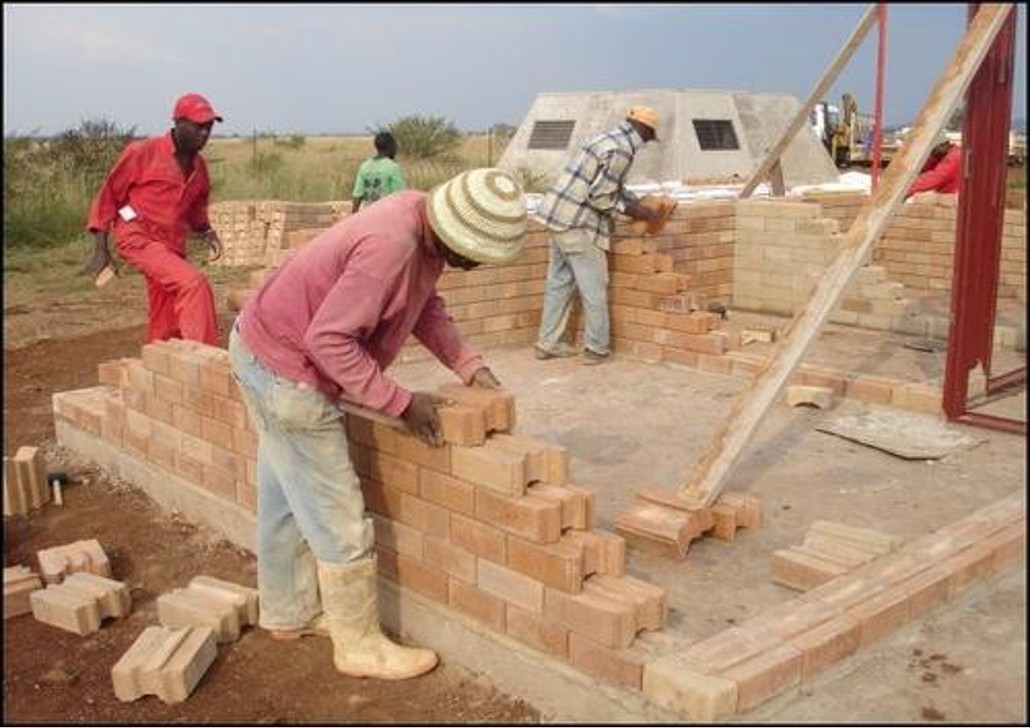
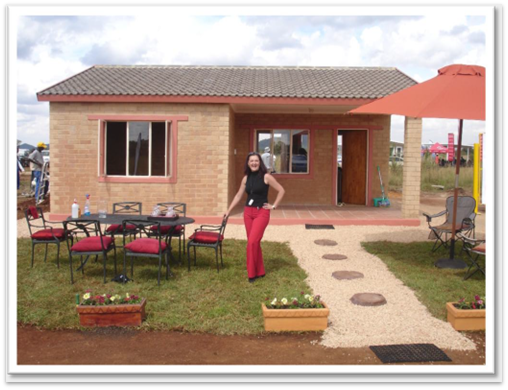
Building Tomorrow, One Brick At a Time
Technical Performance of stabilized Earth Bricks
Structural Strength & Durability
◈ High-pressure compression produces dense bricks suitable for permanent housing construction.
◈ Stabilization improves internal bonding, increasing load-bearing capacity and crack resistance.
◈ Once cured, bricks retain strength under long-term structural and environmental stress.
Moisture Resistance & Thermal Performance
◈ Stabilization reduces water absorption, improving resistance to moisture and erosion.
◈ Dense earth composition provides natural thermal regulation for indoor comfort.
◈ Improved moisture control results in greater dimensional stability and lower maintenance.
How does it benefits your projects?
◈ Improved load‑bearing capacity
◈ Reduced permeability and water damage
◈ Lower reliance on imported aggregates
◈ Reduced maintenance cycle
What Our Clients Say
“Using stabilised earth bricks allowed us to reduce material and transport costs while still achieving solid structural results. The build process was efficient and predictable.”
Get Your Free Soil Assessment Now
Discover the Cost-Effective Advantage
Why Choose Us? Your Bottom Line Matters
Achieve Results with Innovative Methods
Everything You Should Know About Marewe Soil Stabilizers
- ROAD STABILIZATION
- Housing Stabilization
- ROAD STABILIZATION
- Housing Stabilization
What is soil stabilization in road construction?
What type of soil is suitable for road stabilization?
How does soil stabilization improve road lifespan?
Is soil stabilization a replacement for imported aggregates?
How do we determine if our road project is suitable?
What is soil stabilization for housing construction?
Can stabilized soil be used for building houses?
What are stabilised earth bricks (SEBs)?
Do stabilized earth bricks require mortar?
How do we know if our site soil is suitable for housing?
Planning a housing project?
Request a soil evaluation before committing to excavation or replacement.
